
Hello world!
Welcome to WordPress. This is your first post. Edit or delete it, then start writing!
Read More →
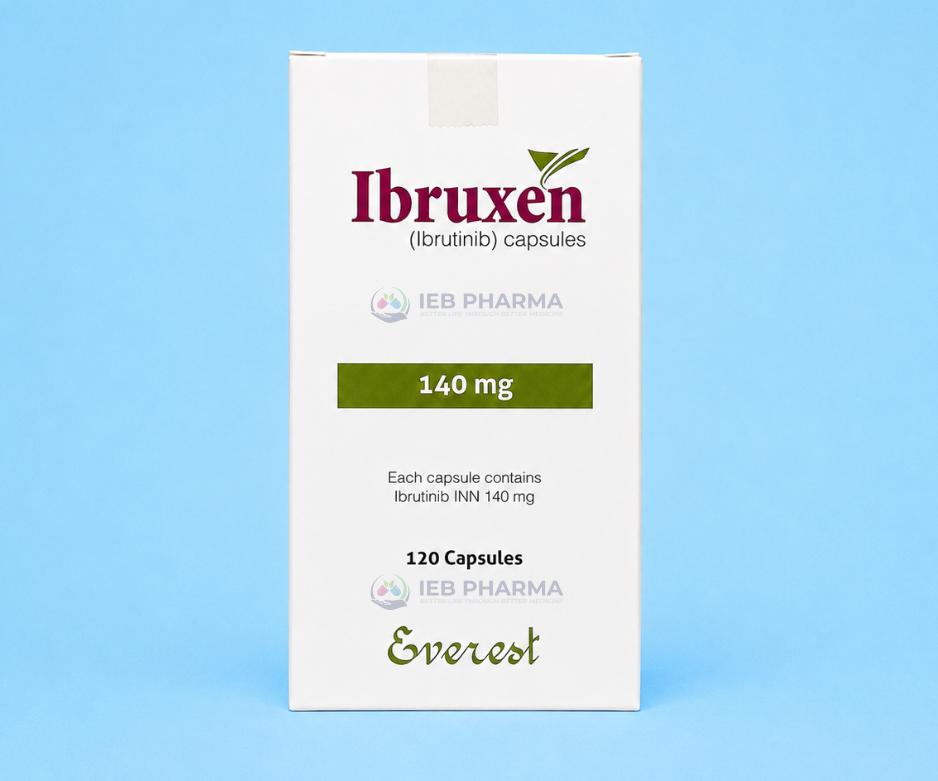
Ibrutinib is an oral targeted anticancer medicine belonging to the Bruton’s tyrosine kinase (BTK) inhibitor class. It is used for specific B-cell malignancies and, under certain approvals, chronic graft-versus-host disease (cGVHD).
The 140 mg strength is a dosage-form strength, not a universal recommended daily dose. For example, the current U.S. IMBRUVICA labeling recommends 420 mg once daily for adult CLL/SLL and Waldenström’s macroglobulinemia, while dosing can differ according to indication and patient factors.
Ibruxen 140 mg is manufactured by Everest Pharmaceuticals Ltd., a Bangladesh-based pharmaceutical company. The company is involved in the development, manufacturing, and supply of pharmaceutical products for local and international markets.
For product-specific details, customers should review the packaging supplied with Ibruxen 140 mg and the applicable prescribing or regulatory information. Manufacturer details, product presentation, and labeling should always be confirmed against the current product packaging and official documentation.
Everest Pharmaceuticals Ltd. operates its head office from:
Rahman’s Regnum Centre
10th & 11th Floor
191/1 Tejgaon Commercial Area
Dhaka-1208, Bangladesh
This location serves as the company’s corporate and administrative office.
The manufacturing facility of Everest Pharmaceuticals Limited is located at:
B-33, 45 & 46, BSCIC
Kanchpur, Narayanganj-1430
Bangladesh
The manufacturing site supports the company’s pharmaceutical production activities.
Checking the authenticity of a medicine before use is an important step when purchasing an Everest Pharmaceuticals Ltd. product. The company’s product verification process can help customers check whether a product is genuine.
Find the QR code printed on the medicine box and scan it using a smartphone. The code should direct you to the official Everest Pharmaceuticals Ltd. product verification page.
After reaching the official verification page, open the package and locate the verification code printed on the product bottle or specified packaging.
Enter the verification code exactly as printed on the product into the appropriate verification field on the official verification page. Submit the code to check the product.
If the verification system confirms the code, this indicates that the product has passed the available electronic verification check.
If the system reports an error, an invalid code, or another verification problem, do not assume the product is genuine. Keep the packaging and contact Everest Pharmaceuticals Ltd. or another appropriate official source for confirmation.
Do not use or distribute a medicine that you believe may be counterfeit. Keep the product, packaging, receipt, and other purchase information available and report the suspected counterfeit through the appropriate regulatory or official channels.
In Bangladesh, suspected counterfeit medicines can be reported to the Directorate General of Drug Administration (DGDA) or the relevant authorities for further investigation.
For greater product safety, purchase medicines from licensed pharmacies or authorized suppliers whenever possible. Checking the packaging, batch information, expiry date, and available electronic verification features can provide additional confidence before using a medicine.
Incepta Pharmaceuticals Ltd. focuses on the development, manufacturing, and distribution of pharmaceutical products across a range of therapeutic areas. Its operations support both the domestic market and international supply, reflecting the company’s growing presence in the pharmaceutical industry.
For Ibrucent 140 mg, product-specific information such as formulation, packaging, manufacturing details, batch information, and approved indications should always be checked against the product packaging and current official manufacturer documentation.
Incepta Pharmaceuticals Ltd.
40 Shahid Tajuddin Ahmed Sarani
Tejgaon I/A, Dhaka-1208
Bangladesh
To help confirm the authenticity of Ibrucent 140 mg, check the product packaging and use the official verification method provided by Incepta Pharmaceuticals Ltd.
Find the QR code printed on the Ibrucent 140 mg product box. Scan it using a compatible smartphone camera or QR code scanner.
The QR code should direct you to the official Incepta Pharmaceuticals Ltd. e-verification system. Make sure you are using the legitimate verification page before entering any product information.
If the verification system asks for a product or security code, enter the details exactly as printed on the packaging. Check the characters carefully before submitting.
After submitting the information, carefully review the result. A successful verification indicates that the product details match the manufacturer’s verification records. Keep in mind that packaging and verification procedures can change, so follow the instructions displayed on the official verification system.
If the system reports that the product cannot be verified, appears unauthorized, or raises a counterfeit warning, do not use the product until its authenticity has been confirmed. Contact Incepta Pharmaceuticals Ltd. or the appropriate medicines regulatory authority for guidance and report the suspected counterfeit product through the proper channels.
For additional protection, purchase Ibrucent 140 mg only from licensed pharmacies or authorized medicine suppliers. Checking the packaging, batch information, expiry date, and available verification features can provide additional reassurance about the product’s authenticity.
Ibrutinib is a small-molecule BTK inhibitor. BTK is involved in B-cell receptor and cytokine-receptor signaling pathways that influence B-cell activation, survival, migration, and adhesion.
Ibrutinib forms a covalent bond with a cysteine residue in the BTK active site and inhibits BTK enzymatic activity. This interferes with signaling pathways that can support the survival and proliferation of abnormal B cells.
It is a targeted therapy rather than conventional cytotoxic chemotherapy.
Ibrutinib is used for particular hematologic diseases. The exact approved indications depend on the country, product, patient age, disease status, and current regulatory authorization.
Current U.S. labeling includes:
European authorization includes specific treatment settings for:
The European indication wording is jurisdiction-specific and should not automatically be applied to every country or every ibrutinib product.
CLL is a blood cancer involving abnormal B lymphocytes. Ibrutinib can be used in specified treatment settings, either alone or in combination with other medicines depending on the applicable authorization and treatment plan.
SLL is closely related to CLL and involves abnormal B lymphocytes primarily in lymph nodes and lymphatic tissues. Ibrutinib is an approved treatment option in certain jurisdictions.
WM is a B-cell malignancy characterized by abnormal lymphoplasmacytic cells and production of an abnormal immunoglobulin known as IgM. Ibrutinib is used in specified treatment settings.
Mantle cell lymphoma is a type of B-cell non-Hodgkin lymphoma. Ibrutinib has approved uses for particular MCL treatment settings in some jurisdictions, including Europe.
Current U.S. labeling includes ibrutinib for adults and pediatric patients aged 1 year and older with cGVHD after failure of one or more lines of systemic therapy.
Ibrutinib may provide benefit by interfering with BTK-dependent signaling in abnormal B cells.
Potential treatment benefits depend on the disease and treatment setting and may include:
The expected benefit is individual and should be assessed by the treating hematologist or oncologist.
Ibrutinib targets Bruton’s tyrosine kinase (BTK).
BTK participates in the B-cell receptor signaling pathway. This pathway transmits signals that influence:
Ibrutinib binds covalently to BTK and inhibits its activity. This can disrupt signaling needed by certain malignant B cells for survival and proliferation.
Because BTK also participates in normal immune functions, blocking the pathway can contribute to treatment-related adverse effects.
Ibrutinib 140 mg means that each relevant dosage unit contains 140 mg of the active ingredient ibrutinib.
It is important to understand that 140 mg does not necessarily mean that a patient should take one capsule or tablet once daily.
For example, current U.S. IMBRUVICA labeling specifies:
Therefore, patients must follow the dose specifically prescribed for their disease.
Ibrutinib dosage depends on:
Treatment should be initiated and supervised by an appropriately experienced healthcare professional.
For current U.S. IMBRUVICA labeling, capsules and tablets are taken orally with water. Capsules should not be opened, broken, or chewed. Tablets should not be cut, crushed, or chewed.
For several current U.S.-approved indications, ibrutinib is taken once daily, approximately at the same time each day. However, the appropriate dose varies according to the indication and patient characteristics.
Patients should:
Ibrutinib can generally be taken with or without food.
The patient should follow the instructions supplied with the specific product and prescription.
More important than choosing before or after food is taking the medicine consistently and correctly.
Current U.S. labeling states that if a dose is not taken at the scheduled time, it can be taken as soon as possible on the same day, with the normal schedule resumed the following day.
Do not take an extra dose to compensate for a missed dose.
If the patient is unsure what to do after missing a dose, they should contact their pharmacist or healthcare professional.
Ibrutinib has several clinically important warnings.
Ibrutinib can increase the risk of bleeding, including serious or potentially life-threatening hemorrhage.
Patients should report unusual or significant bleeding promptly.
Ibrutinib can increase the risk of infections. Fever or other signs of infection should be evaluated promptly.
Treatment has been associated with cardiac arrhythmias, including atrial fibrillation and atrial flutter, as well as cardiac failure and, in some cases, sudden death.
Hypertension can occur during treatment, so blood pressure may require monitoring.
Ibrutinib can cause cytopenias. Current U.S. labeling recommends regular complete blood count monitoring.
Other malignancies have occurred in patients receiving ibrutinib, including skin cancers and other carcinomas.
Hepatotoxicity, including drug-induced liver injury, is an important potential risk and hepatic function may require monitoring.
Tumor lysis syndrome can occur, particularly in patients with high tumor burden or other risk factors.
Ibrutinib can cause fetal harm. Pregnancy and contraception should therefore be discussed with the treating healthcare professional before treatment.
Potential adverse effects include:
The frequency and severity depend on the disease, dose, treatment combination, patient characteristics, and other factors.
Patients should seek prompt medical attention for symptoms such as:
The current U.S. label specifically highlights hemorrhage, infections, cardiac arrhythmias/cardiac failure, hypertension, cytopenias, second primary malignancies, hepatotoxicity, tumor lysis syndrome, and embryo-fetal toxicity as important risks.
Patients should not take ibrutinib unless it has been prescribed for them.
Extra caution or individualized assessment may be required for people with:
The current U.S. label lists no formal contraindications, but this does not mean that ibrutinib is appropriate for everyone.
Ibrutinib has important drug-interaction considerations.
Particular attention is required for medicines affecting CYP3A, because CYP3A modifiers can substantially alter ibrutinib exposure.
Potentially relevant medicines include certain:
Incepta’s product information specifically advises avoiding strong and moderate CYP3A inhibitors where appropriate and avoiding strong CYP3A inducers.
Patients should provide their healthcare professional with a complete list of prescription medicines, OTC products, vitamins, and herbal supplements.
Food and beverages can sometimes influence CYP3A activity.
Grapefruit and Seville oranges can affect CYP3A and may therefore be relevant when taking medicines metabolized through this pathway.
Patients should ask their pharmacist or doctor whether particular foods or beverages should be avoided with their specific ibrutinib product.
Active ingredient: Ibrutinib
Strength: 140 mg
Drug class: Bruton’s tyrosine kinase (BTK) inhibitor
Route: Oral
The current reference IMBRUVICA product is available in several strengths and dosage forms.
Current U.S. IMBRUVICA labeling lists:
The exact strengths and formulations available for a particular generic or locally marketed product can differ.
Ibruxen 140 mg is listed as an ibrutinib product manufactured by Everest Pharmaceuticals Ltd.
The supplied product information identifies:
| Product detail | Information |
|---|---|
| Product | Ibruxen |
| Active ingredient | Ibrutinib |
| Strength | 140 mg |
| Dosage form | Capsule |
| Route | Oral |
| Manufacturer | Everest Pharmaceuticals Ltd. |
| Therapeutic class | BTK inhibitor |
The product information available for Ibruxen identifies the 140 mg capsule as an ibrutinib product from Everest.
Product-specific authorization, manufacturing-site information, batch details, and registration status should be confirmed from the current package and applicable Bangladeshi regulatory documentation.
Storage instructions should be followed for the exact product supplied.
For the current U.S. IMBRUVICA reference product:
For Ibruxen 140 mg and Ibrucent 140 mg, patients should follow the storage instructions printed on their specific packaging rather than automatically applying the storage instructions of another manufacturer’s product.
Keep all medicines away from children.
Patients should understand that:
The current DailyMed record confirms the U.S. dosage forms, strengths, administration, warnings, and storage information for IMBRUVICA.
The EMA confirms the European authorization and jurisdiction-specific indications for IMBRUVICA and identifies Janssen-Cilag International NV as the EU marketing authorization holder.
For the supplied Bangladesh products, Incepta’s official listing confirms Ibrucent 140 mg as an ibrutinib capsule, while the available Ibruxen product information identifies Everest Pharmaceuticals Ltd. as its manufacturer.
Ibrutinib may generally be taken with or without food. However, patients should follow the instructions provided with their specific ibrutinib product and take it consistently as directed by their healthcare professional.
Ibrutinib can increase the risk of bleeding. Tell your doctor or surgeon that you are taking ibrutinib before any planned surgery, medical procedure, or dental procedure. Your healthcare professional will determine whether treatment needs to be temporarily interrupted based on the procedure and your individual risk.
Yes. Ibrutinib can increase the risk of bleeding, including serious bleeding in some patients. Tell your healthcare professional about unusual bruising, prolonged bleeding, blood in the urine or stool, or other signs of bleeding. Medicines that also affect bleeding may further increase this risk.
Ibrutinib can be associated with heart rhythm problems, including atrial fibrillation and atrial flutter. Patients should tell their healthcare professional if they experience a fast or irregular heartbeat, dizziness, fainting, chest discomfort, or shortness of breath during treatment.
Yes. High blood pressure can occur during treatment with ibrutinib. Blood pressure may therefore need to be monitored during treatment, particularly in patients with a history of hypertension or other cardiovascular risk factors.
Ibrutinib can cause changes in blood cell counts, including decreases in certain types of blood cells. Your healthcare professional may recommend blood tests during treatment to monitor blood counts and determine whether any additional management is necessary.
Ibrutinib can increase the risk of infections in some patients because it affects B-cell signaling and immune function. Contact your healthcare professional if you develop fever, persistent cough, difficulty breathing, or other symptoms that may indicate an infection.
Some foods and beverages can affect enzymes involved in the metabolism of ibrutinib. Grapefruit and Seville oranges may be relevant because they can affect CYP3A activity. Ask your healthcare professional or pharmacist whether you should avoid specific foods or beverages while taking your particular ibrutinib product.
If you accidentally take more ibrutinib than prescribed, contact your healthcare professional, poison information service, or emergency medical service for advice. Do not take another dose unless you have been instructed to do so. Bring the medicine packaging with you if medical assessment is required.
Do not stop ibrutinib on your own because of side effects unless you are experiencing a medical emergency requiring immediate care. Contact your healthcare professional promptly about concerning or persistent symptoms. Depending on the severity and type of reaction, your clinician may recommend supportive treatment, temporary interruption, or a dose adjustment.